Vacation Mode: How to Save for Your Dream Trip (Even When You’re Broke-ish)
A tight budget doesn’t have to cancel travel plans. With a clear target, a simple sinking fund, and a few smart swaps, saving for a trip becomes a repeatable system—without relying on unrealistic no-fun rules. The goal is to make progress you can actually maintain, even when life is busy and money feels tight.
Pick a trip that fits real life (dates, destination, style)
Start by choosing a trip that matches your calendar and your energy—not an imaginary version of your life where everything is flexible. Decide your non-negotiables first: when you want to go, how long you can realistically be away, and the one “must-do” experience that makes the whole trip feel worth it (a concert, a national park hike, a beach weekend, a food tour).
Next, pick one budget lever to pull the hardest. Don’t try to do everything at once—choose the move that gives you the biggest savings with the least misery:
- Travel off-peak (or even mid-week instead of weekends)
- Shorten the trip by 1–2 days
- Pick a closer destination
- Stay in a cheaper neighborhood with good transit
Set a planning deadline of 48 hours. That’s enough time to choose a destination and rough dates without falling into endless browsing that turns into zero action.
Build a total-trip number (so the goal isn’t a mystery)
Saving gets easier when the goal is specific. Break the trip into categories: transportation, lodging, food, local transit, activities, buffer, and “back home” expenses like pet care or a bill that still hits while you’re away.
Add a 10–15% buffer for price changes and surprises, and keep it separate from “shopping money.” The buffer is what prevents one unexpected fee from becoming credit-card debt. If the total feels impossible, cut scope before cutting essentials: fewer paid activities, less nightlife spending, or a shorter itinerary.
Sample vacation budget starter template
| Category |
Estimate |
Notes |
| Transportation |
$___ |
Flights/train/gas + bags/parking |
| Lodging |
$___ |
Hotel/hostel/Airbnb + taxes/fees |
| Food & drinks |
$___ |
Groceries + meals out |
| Local transit |
$___ |
Metro/rideshare/car rental |
| Activities |
$___ |
Tours, museums, day trips |
| Buffer (10–15%) |
$___ |
Unexpected costs |
| Total goal |
$___ |
What the sinking fund needs |
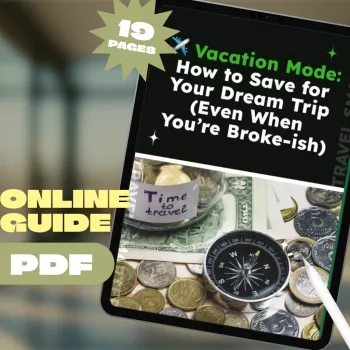
If you want a ready-to-use structure you can follow each time, the downloadable guide Vacation Mode: How to Save for Your Dream Trip (Even When You’re Broke-ish) | Guide to How to Save for a Vacation on a Tight Budget can help you turn that total into a simple weekly plan.
Set up a “sinking fund” that saves automatically
A sinking fund is just a dedicated stash of money for a future expense. Open a separate savings pocket/account labeled with the trip name so it’s harder to “accidentally” spend it. Then automate transfers right after payday—even if it’s small. Saving before decisions beats saving after willpower.
Add micro-savings rules to keep momentum:
- Round-ups (every purchase rounds to the nearest dollar and saves the change)
- Send every cash-back payout directly to the travel fund
- Transfer a set amount each time you skip takeout or delivery
Need a simple system to organize spending categories? The Consumer Financial Protection Bureau’s budgeting tools can help you set up a clean baseline before you start trimming: Consumer Financial Protection Bureau — Budgeting resources.
Find money without making life miserable
Run a 14-day spending audit (no guilt, just data). Highlight the top three leak categories—common ones include delivery, subscriptions, impulse snacks, and rideshares. Those are your “high-impact” targets.
Use the rule: swap, not stop. Keep the treat, just lower the price:
- One coffee out + home coffee the rest of the week
- One restaurant meal + a grocery picnic
- One paid workout class + free walks, YouTube, or a community center pass
Also: negotiate and trim. A 15-minute call to lower internet or phone rates can beat weeks of tiny sacrifices. Cancel unused subscriptions and compare insurance options if it makes sense for your situation. Finally, set a weekly travel allowance for fun spending; once it’s spent, you stop—no guilt, just boundaries.
Add income in small, realistic bursts
Lower the trip cost without lowering the fun
Balance paid and free experiences: plan one “splurge” moment (the thing you’ll remember) and fill the rest with high-vibe, low-cost options like public markets, free museum days, hikes, beaches, walking tours, and neighborhoods worth wandering. If you’re traveling internationally or to unfamiliar areas, check current guidance before you lock plans: U.S. Department of State — Travel Advisories.
And if you’re unsure what can go in your carry-on, confirm before you pack to avoid confiscations and replacement costs: TSA — What Can I Bring?.
Keep momentum with a simple countdown plan
FAQ
How much should be saved each week for a trip?
Use a simple formula: total trip goal ÷ number of weeks until departure. Include a 10–15% buffer in the total, and if the weekly number feels too high, adjust by shifting dates, shortening the trip, or extending the timeline.
Should a vacation be paid for with a credit card?
Use a credit card only if you can pay the balance in full by the due date. Card benefits like purchase protection can be helpful, but interest charges can erase your travel savings fast if you carry a balance.
What if saving is impossible with current bills?
Reduce the trip scope, extend the timeline, and start with micro-savings so you can build traction without strain. Pair that with one short-term income boost or a bill negotiation to create enough breathing room to keep going.
Recommended for you












Leave a comment