Unlock Your Hidden Strengths and Talents: A Practical Self-Discovery Workbook for Real-Life Growth
Hidden strengths rarely announce themselves as “talent.” They show up as patterns: what feels natural, what gives you energy, what people consistently rely on, and what problems you secretly enjoy solving. The challenge isn’t becoming someone new—it’s noticing what’s already working, gathering real evidence, and turning that clarity into repeatable habits you can use at work, in relationships, and toward personal goals.
If you want a guided, structured way to do that, Unlock Your Hidden Strengths and Talents – Self-Discovery Workbook is designed to move you from vague self-knowledge to clear, testable strengths you can practice week by week.
What “strengths” and “talents” actually look like in daily life
It helps to separate two ideas that often get blurred together:
- Talent is a natural ease or instinct. It can appear early, or it can be overlooked precisely because it feels “normal” to you.
- Strength is talent plus practice, skill, and self-awareness—something you can rely on to produce results in real situations.
Strengths also have recognizable signals. You may learn certain things unusually fast, receive consistent positive feedback, or hit “flow” states where time passes quickly. Another clue: some problems feel satisfying to solve even when they’re difficult. And strengths aren’t only “big achievements.” Many of the most valuable ones are subtle—listening deeply, simplifying chaos, spotting risks early, or building trust in tense moments.
If you tend to discount what’s easy for you, try this reframe: what feels easy might be your most transferable advantage, because you can apply it repeatedly without draining yourself.
A 4-step method to discover strengths that are already working
This method is built around evidence. Instead of guessing, you observe your life like a researcher.
Step 1 — Track energy and friction for 7 days
Each day, jot down tasks that energized you and tasks that drained you. Note the conditions: the people involved, the pace, how much autonomy you had, and whether the goal was clear. Patterns emerge quickly when you track context, not just the task.
Step 2 — Collect evidence (10 examples)
Pull ten moments where something went well—wins, proud moments, “saved the day” situations. Include small moments (helping a friend make a decision, catching a mistake, fixing a process). Small moments are often the purest evidence because they’re less performative.
Step 3 — Ask for patterns (not praise)
Step 4 — Name strengths as behaviors
Evidence-to-Strength Mapping
| Evidence you can collect |
What it may reveal |
How to test it this week |
| You solve unclear problems quickly |
Sense-making, systems thinking, prioritization |
Take one messy task and create a 3-step plan; ask if it improved clarity for others |
| People come to you for advice |
Trust-building, listening, perspective-taking |
Do two structured check-ins; reflect on what questions unlocked insight |
| You spot mistakes before they happen |
Risk detection, attention to detail, prevention mindset |
Pre-mortem one project; list top 5 risks and one prevention action each |
| You simplify complex topics |
Teaching, communication, synthesis |
Explain a concept in 5 sentences; ask someone to repeat it back |
| You rally people during stress |
Emotional regulation, leadership, encouragement |
During a tense moment, use a calm script and note the effect on the group |
Workbook-style prompts that turn insight into clarity
For extra momentum, keep your reflections short and consistent. Research-backed journaling can support emotional processing and insight when done regularly (see the American Psychological Association’s overview of journaling), and simple CBT-style techniques can help you reframe unhelpful thoughts while you test new behaviors (see the NHS self-help CBT techniques page).
Turn strengths into a personal growth plan (without burning out)
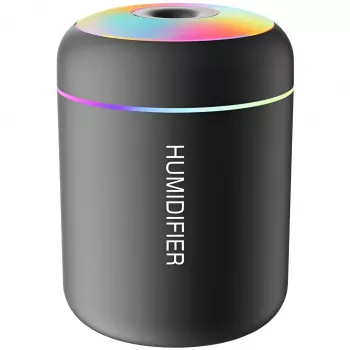
A small environmental tweak can also make routines easier to keep. If you like pairing reflection with a calming cue, the Mini USB Aroma Humidifier & Essential Oil Diffuser with Soft LED Light can help create a consistent “start signal” for journaling or weekly review sessions.
Common blocks that hide strengths—and how to move through them
If you want a performance angle, strengths research frequently highlights that developing what you naturally do well can improve engagement and outcomes over time (see insights from Harvard Business Review).
A simple weekly self-discovery schedule (30 minutes total)
If your routines happen on the go—commutes, coffee shops, travel—a reliable power source helps you keep notes consistent. The 65W GaN USB C Fast Wall Charger with Quick Charge is a practical add-on for staying charged during your weekly reviews and strength-tracking sessions.
Self-Discovery Workbook: a practical guide to uncovering strengths and talents
If you feel “capable but unclear,” structure helps. Unlock Your Hidden Strengths and Talents – A Practical Self-Discovery Workbook is built to guide you from scattered observations to clear, testable strengths—using prompts, mapping exercises, and a repeatable process you can revisit as your goals evolve.
FAQ
How long does it take to discover strengths and talents?
You can spot early signals in 7–14 days by tracking energy and asking for pattern-based feedback. Clearer strength statements usually take 3–4 weeks of collecting examples and testing small experiments, and confidence becomes reliable after you’ve repeated the strengths in real situations several times.
What if strengths feel unclear or everything feels average?
Focus on specific evidence: wins, “thank you” moments, and tasks that feel easy but create outsized value for others. Ask people for concrete examples of when you helped, then test one strength hypothesis at a time with a small, low-stakes experiment.
Can strengths change over time?
Talents often stay relatively stable, but strengths evolve with practice, roles, environment, and values. Updating your strengths map every few months helps you stay aligned with what’s working now, not just what worked in a past season.
Recommended for you













Leave a comment