Save Smart, Live Better: A Fast-Saving Checklist and Budget Planner for Low Income
Saving money on a low income is less about perfect discipline and more about having a simple system that works on hard weeks. A fast-saving checklist helps identify quick wins, a budget planner keeps the basics covered, and a few repeatable routines prevent small leaks from draining the month. The goal is a practical, low-stress approach: stabilize essentials, find immediate savings, set a realistic mini-goal, and track progress in minutes per day. A printable digital planner can make the process easier by turning decisions into checkboxes and clear totals.
Start with stability: essentials, deadlines, and the next 7 days
Before trying to “cut everything,” lock down the expenses that can cause the most damage if they’re late: housing, utilities, phone, and transportation. Late fees, shutoffs, and missed workdays cost more than most small splurges.
- List bills that can trigger fees or shutoffs (rent, utilities, phone, transportation) and write due dates in one place.
- Circle the next 7 days: estimate the minimum you need to keep essentials running until your next paycheck or benefits deposit.
- Separate “must-pay” from “can-negotiate” (medical bills, credit cards, old collections) so urgent needs stay protected.
- If cash is tight, prioritize keeping housing, utilities, and transportation stable before tackling extra debt payments.
- Create a 72-hour spending pause rule on non-essentials to shut down impulse buys while you set up the plan.
If you need help identifying benefit programs or temporary support, start with USA.gov’s benefits and financial help for reputable, up-to-date resources.
Fast-saving checklist: quick wins that add up this week
Fast savings come from reducing repeat costs—not from extreme deprivation. Start with the “leaks” that happen automatically or that feel small in the moment but stack up across the week.
- Cut the biggest leaks first: subscription audits, convenience fees, delivery markups, and daily purchases that repeat.
- Reduce grocery pressure with a pantry-first plan: build meals from what you already have and shop only for missing staples.
- Use price anchors: pick 5–10 common items (bread, eggs, rice, soap) and track the lowest local price to avoid overpaying.
- Lower utilities without upgrades: shorter showers, cold-water laundry, power strips, and thermostat adjustments when possible.
- Avoid late fees by setting reminders 3–5 days ahead and calling for extensions before the due date if needed.
- Replace expensive routines with low-cost swaps (home coffee, packed lunches, library/park entertainment).
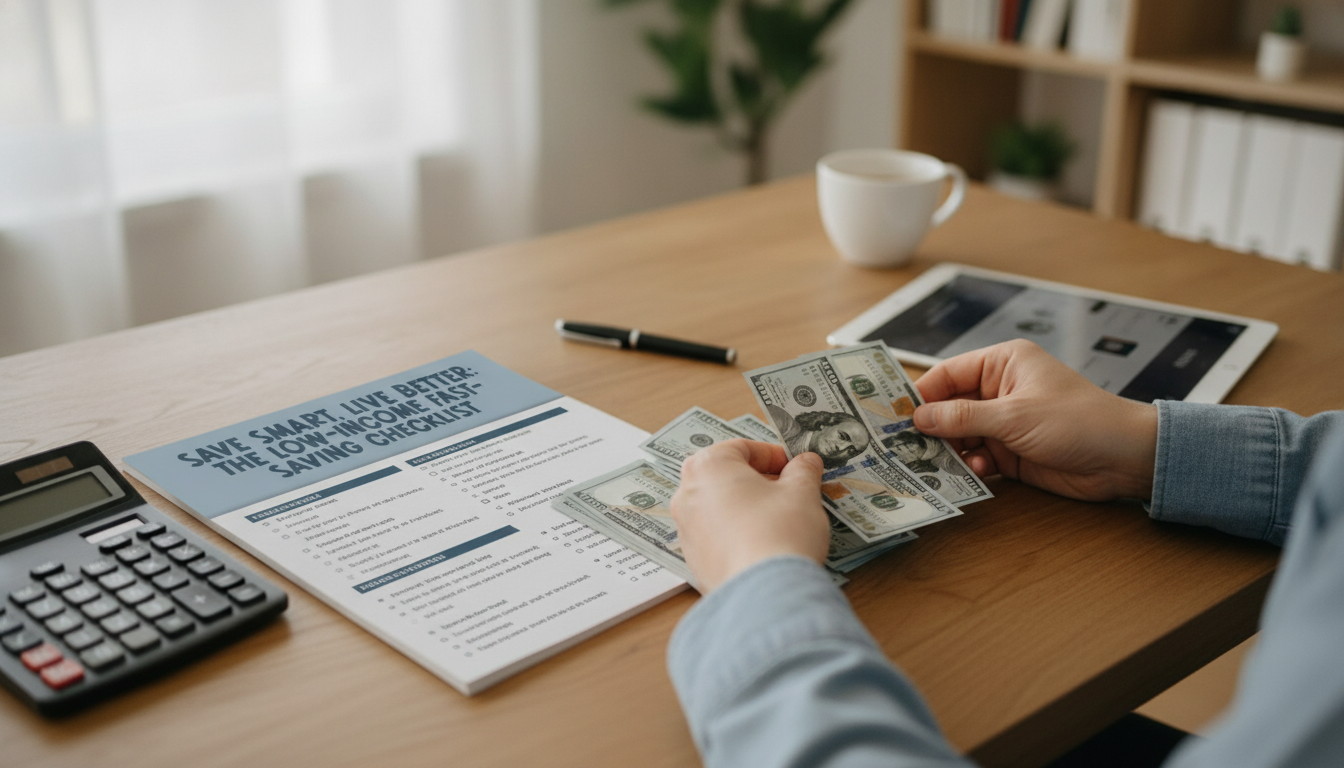
One-Week Fast-Saving Checklist (fill in your own numbers)
| Checklist item |
Time needed |
Typical savings range |
Your target |
| Cancel or pause 1 subscription |
10–15 min |
$5–$20/month |
|
| Plan 3 pantry-first dinners |
20–30 min |
$15–$40/week |
|
| No-delivery week (pickup or cook) |
0–10 min |
$10–$60/week |
|
| Call a biller to request a fee waiver/extension |
10–20 min |
$10–$50 one-time |
|
| Set a daily cash limit (or card lock) for 7 days |
5 min |
$10–$100/week |
|
Build a budget that works on low income (simple, flexible, realistic)
A low-income budget has to survive “real life”: irregular hours, unexpected copays, school costs, and weeks where energy is limited. The best budget is the one you can keep using.
- Use a minimum budget first: map essentials plus the smallest workable amounts for groceries and transportation.
- Add a small buffer category (even $5–$20) to reduce overdrafts and last-minute borrowing.
- Choose a style that matches irregular income: weekly spending plan, paycheck-to-paycheck, or cash-envelope categories.
- If income varies, build the plan on the lowest expected week and treat extra income as catch-up and savings.
- Track only what matters: category totals are usually enough—every receipt isn’t required.
If you want a trusted starting point for categories and basics, the Consumer Financial Protection Bureau (CFPB) budgeting resources are practical and easy to follow.
Set a savings goal that is small enough to win—and repeat
When money is tight, the most useful savings goal is one you can actually complete. A mini-goal builds momentum and protects you from the next surprise expense.
Avoid the most common low-income budget traps
For reliable guidance on debt, disputes, and avoiding costly mistakes, use the Federal Trade Commission (FTC) credit and debt resources.
Using a printable digital checklist and planner to stay consistent
Helpful low-cost tools from the shop
A practical routine to keep savings moving (15 minutes per week)
FAQ
How much should be saved each month on a low income?
Start with a small, consistent amount that won’t destabilize essentials—often $5–$25 per paycheck—until bills are reliably covered for a full month. After stability improves, increase savings in small steps tied to a mini emergency fund goal.
What is the fastest way to save money when income is tight?
Focus on immediate high-impact actions: cancel or pause subscriptions, cut delivery and convenience spending for a week, do pantry-first meal planning, and call billers early to request extensions or fee waivers. Pair that with a simple 7-day spending cap to stop small repeat purchases.
Is a printable budget planner better than an app?
It depends on what you’ll use consistently. Printable planners can reduce overwhelm, work offline, and keep priorities visible, while apps can automate tracking; the better option is the one you’ll update weekly.
Recommended for you













Leave a comment